
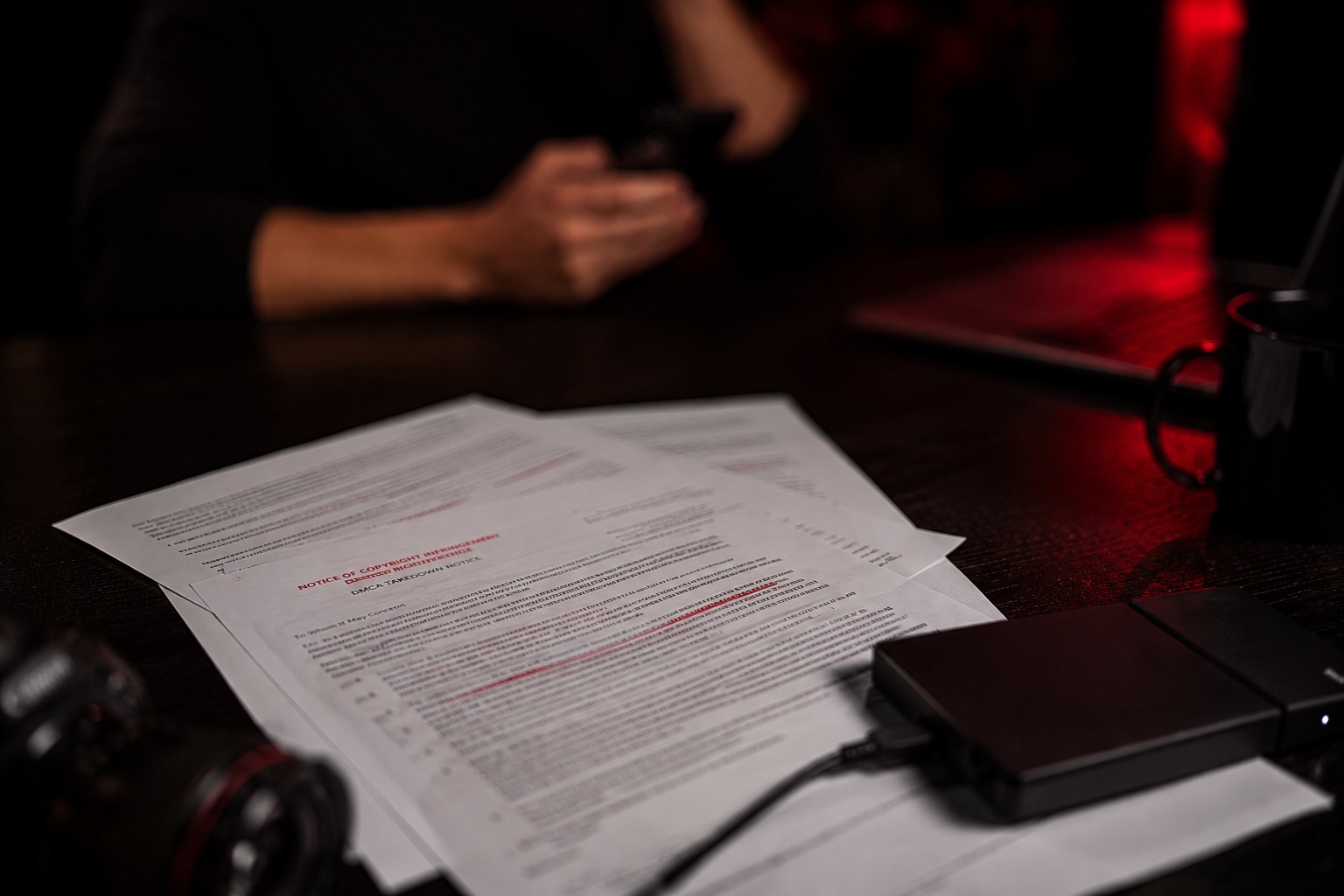
Security
Your Content Leaked: A Calm, Step-by-Step Takedown and Response Plan
A Head of Security's playbook for adult creators facing leaked or stolen content — DMCA takedowns, evidence, search de-indexing, extortion, and staying composed under pressure.
In my other guides I've focused on prevention — separating identities, locking down accounts, scrubbing metadata. Prevention is the highest-leverage work you can do, and it stops most problems before they start. But I'd be doing you a disservice if I pretended prevention were the whole story, because sometimes, despite everything, content gets out. A subscriber records what they shouldn't. A leak site scrapes a paid platform. A stolen set ends up on a forum or a tube site.
If that happens to you, the single most valuable thing you can have is not a perfect defense. It's a plan you wrote while you were calm, so that when you're not calm — and you won't be — you have steps to follow instead of panic to drown in. This is that plan.
Let me say one thing first, plainly, because creators in this situation often carry shame that isn't theirs to carry: someone stealing and spreading your work is the wrongdoer, not you. Your content was made by a consenting adult and shared on your terms. Someone violating those terms committed the offense. Keep that clear in your head, because the people who recover best are the ones who treat this as a problem to manage, not a verdict on themselves.
First: stabilize yourself before you act
The instinct when you discover a leak is to do everything at once, immediately, while flooded with adrenaline. Resist it for ten minutes. Panic produces sloppy work — missed evidence, messages you regret, decisions made to stop the feeling rather than solve the problem.
Take a breath. Then work the plan in order. Speed matters, but methodical speed beats frantic speed every time. A leak is an incident, not the end of your career. The objective is to limit spread, remove what you can, and protect yourself — not to win every battle in the first hour.
Step 1: Document everything before it moves
Before you send a single takedown or react publicly, preserve evidence. Things online move and disappear, and you'll need proof of what was posted where.
- Screenshot everything — the infringing content, the URL, the username or account that posted it, timestamps, and any surrounding context like captions or comments.
- Save the URLs in a dedicated document. You'll be referencing them repeatedly across takedown requests.
- Note where each copy lives — which site, which platform, which page. A leak often appears in several places; track them as a list you can work through.
- Record dates and times of your discovery and your actions. A clean timeline is invaluable if this escalates to a platform's trust-and-safety team or to law enforcement.
Keep all of this in your compartmentalized creator records, not mixed into your personal files. You're building a case file. Treat it like one.
Step 2: Understand your strongest tool — the DMCA takedown
For most creators, the most powerful and accessible weapon against stolen content is the DMCA takedown notice. Here's the mechanism in plain terms: you own the copyright to the content you create the moment you create it. Under the U.S. Digital Millennium Copyright Act — and equivalents in many other countries — online services that host user content are required to remove infringing material when the copyright holder properly notifies them. That copyright holder is you.
This matters enormously, because it means you don't need a lawyer or a court order to start getting content removed. You can send takedown notices yourself.
A valid DMCA notice generally includes:
- Identification of the copyrighted work — the original content that was stolen.
- Identification of the infringing material — the specific URLs where it's posted.
- Your contact information so the service can respond.
- A statement of good-faith belief that the use isn't authorized.
- A statement, under penalty of perjury, that the information is accurate and you're the owner or authorized to act for them.
- Your signature (a typed full name is generally accepted).
One important privacy note specific to our world: a DMCA notice can require contact information that may become visible to the recipient or appear in transparency databases. This is exactly why operating through a business entity, a non-home address, and a creator-specific email — the compartmentalization I've written about before — pays off. It lets you enforce your rights without attaching your home address to the process. If you haven't set that up, a takedown service (below) can act as the buffer.
Step 3: Work the takedown in order of leverage
Not all targets are equal. Send your notices where they'll do the most good, in this order:
- The host or platform displaying the content. Most legitimate sites — including tube sites, forums, and image hosts — have a designated DMCA agent and an abuse or copyright contact, often linked in the footer. Send your notice there first. Reputable hosts comply because non-compliance costs them their legal safe harbor.
- The file host behind it, if the content is embedded or linked from a separate storage service. Removing the source file can take down every copy that points to it.
- Search engines. Even when you can't get a copy removed from a stubborn host, you can request that search engines de-index the URL — removing it from search results. This dramatically reduces how many people ever find it, which is often the practical win even when full removal isn't possible.
- The payment or ad rails, for commercial leak operations. Sites that profit from stolen content depend on processors and ad networks that have their own abuse policies. Reporting there can pressure operations that ignore direct notices.
Keep a tracking sheet: each URL, where you sent the notice, the date, and the response. This is tedious. It's also what works.
Step 4: Consider a professional takedown service
When a leak spreads across dozens of sites, doing it all by hand becomes overwhelming fast — and the emotional weight of staring at your stolen work for hours is real. Specialized content-removal and takedown services exist precisely for this. They handle mass DMCA filing, search de-indexing, and ongoing monitoring for re-uploads, and they act as a buffer between you and the process.
For a creator with a serious leak, the cost is often worth it — not just for the labor saved, but for the distance it puts between you and the grind of removal. Creator-focused organizations and anti-piracy services are increasingly familiar with adult-industry leaks specifically. Identify one before you need it, so it's a phone call and not a frantic search.
Step 5: Handle extortion correctly — do not pay
Sometimes a leak isn't just theft; it's leverage. Someone contacts you with stolen content, or a private detail, and demands money or more content to keep it from spreading. This is extortion, and it is a crime in most jurisdictions.
The guidance from security professionals and law enforcement is consistent and I'll repeat it without hedging:
- Do not pay. Paying marks you as a target who pays, and it rarely ends the demands — it usually escalates them. You're not buying safety; you're buying a second demand.
- Stop engaging. Do not negotiate, plead, or argue. Every message gives the extortionist more material and more emotional leverage. Disengage.
- Preserve all evidence — messages, usernames, payment demands, timestamps. Screenshot before anything is deleted.
- Report it. To the platform, and to law enforcement — extortion and, where relevant, non-consensual distribution of intimate images are crimes that authorities in many places take seriously, with dedicated units in some regions.
- Lean on your support network, not on the attacker. Specialized organizations help creators through exactly this, and you should not carry it alone.
The extortionist's entire power comes from your fear and your isolation. Methodical documentation, refusal to pay, and reporting collapse that power. They are betting you'll panic and pay quietly. Don't give them the bet.
Step 6: A special note on non-consensual and fabricated content
There's a category that deserves separate mention because it's both more harmful and, increasingly, more enforceable: non-consensual intimate imagery — including content shared without your consent and AI-generated "deepfake" material depicting you. This is treated more seriously than ordinary copyright infringement, both on platforms and under a growing body of law in many jurisdictions.
If you're targeted this way: document as above, but also know that many platforms have specific, expedited reporting channels for non-consensual intimate imagery that are faster than standard copyright routes. Dedicated hash-matching tools and organizations exist to help remove this kind of content at scale and prevent its re-upload. Use those specialized channels — they're built for exactly this and tend to move faster than a generic abuse form.
Step 7: Protect your accounts and audience during the incident
A leak sometimes coincides with, or triggers, attempts on your accounts. While you're handling removal, take a moment to protect the rest of your operation:
- Verify your accounts are secure — confirm 2FA is intact, check active sessions, and revoke anything unfamiliar.
- Watch for opportunistic phishing. Bad actors know a leak rattles you, and a rattled creator clicks things they shouldn't. Be extra skeptical of "we can help remove this" messages with links.
- Communicate with your audience if useful. A calm, brief note from a channel you control — acknowledging stolen content is circulating and asking fans not to engage with or spread it — both protects your reputation and turns your real fans into allies. Many will report leaks on your behalf.
Write your plan now, not later
Everything above is far easier to execute if you've prepared the scaffolding in advance. Before you ever need it, do these five things:
- Keep clean records and watermark your work, so proving ownership in a takedown is straightforward.
- Set up compartmentalized contact details — a creator email and a non-home address — so enforcement doesn't expose your identity.
- Identify a takedown service and a support organization and save their details.
- Know each of your platforms' abuse and trust-and-safety contacts ahead of time.
- Write the steps down somewhere you can reach without your main accounts.
A plan turns a catastrophe into an incident you work through. That difference is everything, and it costs you nothing today but an hour of calm preparation.
The realistic close
I won't tell you a leak is no big deal, because it is one, and minimizing it would be dishonest. What I'll tell you is that it is survivable, removable in large part, and not a reflection of any failing on your part. Creators get through this regularly — the ones who do are simply the ones who documented, worked the takedowns methodically, refused to be extorted, and asked for help instead of carrying it alone.
Prepare while you're calm. Protect yourself and your identity in the daily work so a leak exposes as little as possible. And if it ever happens, work the plan. You have more tools and more rights than the people who steal from you want you to believe.
— Wayne, Head of Security, RedSky
Related reading
Ready to see your feed, unfiltered?
RedSky is the adults-only Bluesky client. Your account, your follows, your content — nothing blurred, nothing buried.
Open RedSky →